
Choosing between a dry type transformer and an oil-immersed transformer is not simply a matter of comparing purchase prices. The better choice depends on installation location, capacity, fire-safety requirements, environmental conditions, maintenance strategy, and expected operating life.
For engineers and procurement teams searching for the difference between dry type transformer and oil type transformer pdf, the key point is that both technologies perform the same fundamental voltage-conversion function but use fundamentally different insulation and heat-transfer systems. Dry-type units rely on air and solid insulation, while oil-immersed designs place the core and windings in insulating liquid.
YueBian Electric offers both dry-type and oil-immersed transformer solutions, including cast resin units, SG(B)10 non-encapsulated coil transformers, amorphous alloy dry transformers, sealed oil-immersed distribution transformers, and OLTC transformers.
The most important distinction in the cast resin transformer vs oil transformer comparison is the medium surrounding the active parts.
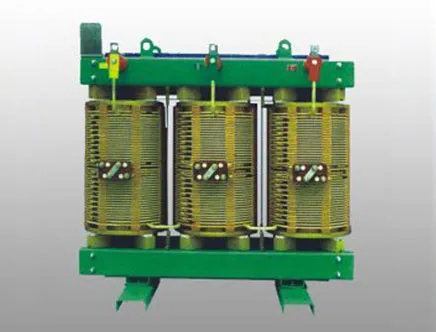
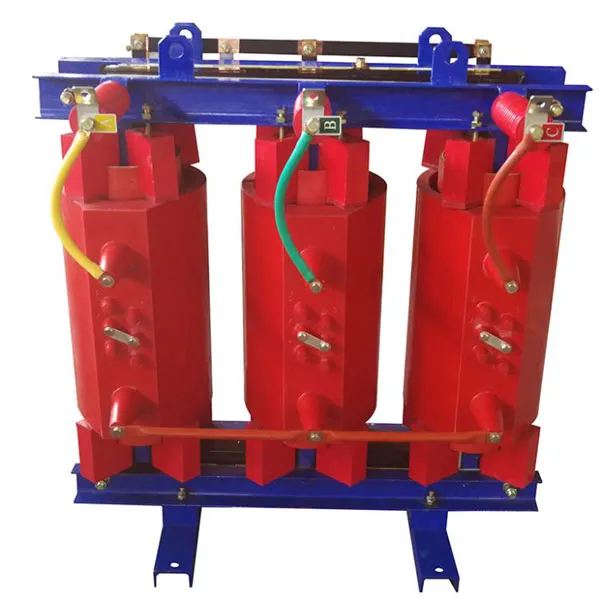
In a dry-type transformer, the windings are insulated using solid insulation systems and cooled naturally by air or with forced air. Cast resin models encapsulate the windings with epoxy resin, providing mechanical protection and resistance to moisture and environmental contaminants.
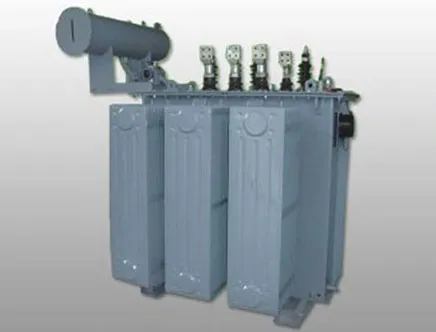
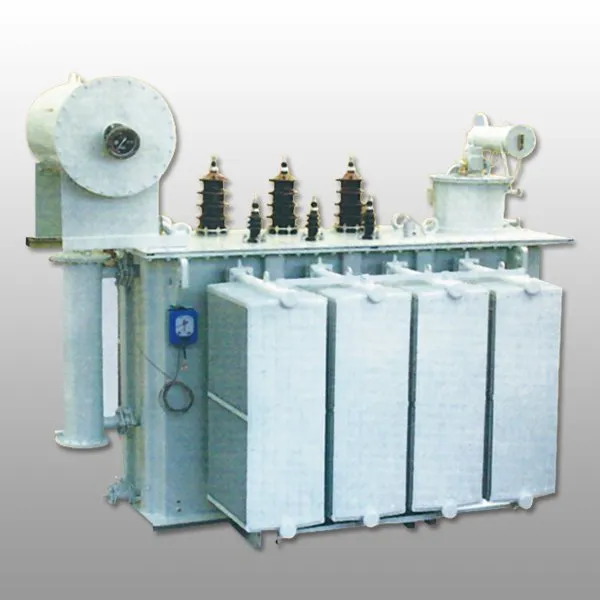
Oil-immersed transformers place the core and windings inside a tank filled with transformer oil. The liquid provides both insulation and heat transfer, allowing the transformer to dissipate heat through radiators or other cooling structures.
The IEC 60076-11 standard for dry-type transformers covers dry-type power transformers with equipment voltages up to and including 72.5 kV within its defined scope.
This distinction affects installation, fire protection, maintenance, and total ownership cost.
The following comparison provides a practical overview for project planning.
Factor | Dry-Type Transformer | Oil-Immersed Transformer |
Insulation medium | Solid insulation/air | Transformer oil |
Cooling | Air natural or forced air | Oil and air circulation |
Fire considerations | No insulating oil | Requires oil-related fire-risk assessment |
Typical installation | Indoor, commercial, industrial | Indoor or outdoor |
Maintenance | Generally low routine maintenance | Requires oil and condition monitoring |
Environmental concerns | No oil leakage | Oil containment may be required |
Initial investment | Usually higher | Often more economical |
High-capacity applications | Available, but application dependent | Widely used |
Space planning | Can be installed near loads | Often requires dedicated arrangement |
Typical applications | Buildings, factories, sensitive indoor sites | Utilities, substations, grid distribution |
The U.S. Department of Energy recognizes both liquid-immersed and dry-type distribution transformers within its distribution-transformer efficiency framework. Its current definition covers liquid-immersed units from 10 kVA to 2500 kVA and dry-type units from 15 kVA to 2500 kVA for the specified U.S. distribution-transformer category.
A dry-type transformer is often selected when the installation environment places a high priority on fire safety, indoor installation, or minimizing liquid-related risks.
Dry transformers can be positioned closer to electrical loads without the presence of transformer oil. This can be advantageous in commercial buildings, hospitals, data-related facilities, manufacturing plants, and other projects where indoor electrical equipment must meet strict site requirements.
YueBian Electric describes its dry-type transformers as suitable for load-center installation and highlights characteristics including fire resistance, low losses, moisture resistance, and temperature monitoring. Its current dry-type product range includes 11 kV cast resin models, SG(B)10 non-encapsulated coil transformers, 20 kV and 33 kV cast resin transformers, and amorphous alloy units.
Because dry-type transformers do not use insulating oil, they remove oil leakage and oil ignition from the transformer itself as a design concern.
This does not mean that a dry transformer is completely fire-proof under every fault condition. The complete electrical installation still requires appropriate protection, ventilation, clearances, and fire-safety engineering.
Cast resin construction can provide additional protection for windings against moisture and contaminants. However, enclosure rating, ventilation, condensation control, and the actual environmental classification still need to be considered during specification.
Oil-immersed transformers remain highly relevant for utility distribution, substations, grid expansion, and higher-capacity applications.
Oil-immersed technology is widely used where transformers are installed outdoors or in dedicated substations.
YueBian Electric's oil-immersed range includes S9, S9-M, S11, S13-M, S15-M amorphous alloy, 11 kV, 20 kV, and 33 kV distribution transformers. Its listed products cover capacities from small distribution ratings up to significantly larger power-transformer applications.
For projects requiring substantial capacity, oil cooling can offer an effective way to transfer heat from the transformer windings and core.
This is one reason oil-immersed transformers continue to be widely used in utility and industrial power systems.
The U.S. Department of Energy's distribution-transformer program also treats liquid-immersed, low-voltage dry-type, and medium-voltage dry-type transformers as important categories in distribution infrastructure.
The term oil transformer types covers several configurations rather than one specific product.
Common categories include:
Sealed-tank distribution transformers
Conventional oil-immersed distribution transformers
Amorphous alloy transformers
On-load tap-changing transformers
Power transformers
Special-purpose oil-immersed transformers
For example, YueBian Electric lists S11 low-loss distribution transformers, S13-M low-loss units, S15-M amorphous alloy transformers, and transformers equipped with on-load tap changers.
Amorphous alloy technology is particularly relevant when reducing no-load losses is an important project objective.
A common procurement mistake is to compare only the quotation.
The correct comparison should consider the entire operating environment.
A dry-type transformer may require a higher initial equipment investment, but the project may avoid some oil containment and fire-protection requirements.
An oil-immersed transformer can offer a lower initial equipment cost in many applications, particularly when outdoor installation is straightforward.
Dry-type transformers generally do not require transformer-oil testing or oil replacement. Their maintenance focus is more likely to include cleanliness, ventilation, connections, insulation condition, and temperature monitoring.
Oil-immersed transformers require attention to oil condition, temperature, oil level, sealing, and protection devices. YueBian notes that oil replacement should be determined by oil condition and test results rather than by an arbitrary fixed replacement interval.
Efficiency should be evaluated using actual load profiles rather than relying solely on transformer type.
The ENERGY STAR guidance on distribution transformer energy waste notes that higher-efficiency liquid-immersed distribution transformers can reduce distribution-transformer losses significantly over their operating lifetime.
This reinforces an important procurement principle: purchase price should be evaluated together with losses and lifetime operating costs.
When comparing a dry type transformer manufacturer, buyers should look beyond catalog capacity.
Important evaluation points include:
Applicable IEC or national standards
Factory testing capabilities
Insulation system
Partial-discharge performance
Temperature-rise performance
Capacity range
Environmental protection
Quality-control procedures
Export experience
Technical documentation
After-sales support
For buyers searching for dry type distribution transformer manufacturers, the manufacturing process is particularly important for cast resin products because resin casting quality directly affects insulation integrity and long-term reliability.
IEC 60076-11 specifically addresses dry-type transformer requirements and includes considerations related to dielectric and thermal performance, environmental classes, climatic conditions, seismic classification, and fire behavior.
For international buyers looking for a dry type transformer supplier, supplier capability should be evaluated against the project's technical specification rather than the country of origin alone.
YueBian Electric states that it has specialized in dry-type transformers since 1984 and exports its products internationally. Its listed dry-type range includes capacities from 10 kVA to 2500 kVA for its 11 kV cast resin series, while other product families cover different voltage and capacity ranges.
For buyers searching for dry type transformer exporters or dry transformer suppliers, it is useful to request:
Technical datasheets
Routine test reports
Applicable standards
Temperature-rise data
Loss data
Dimensions and weight
Warranty conditions
Installation requirements
Delivery schedule
Spare-parts and service arrangements
An oil immersed transformer price should not be evaluated independently from capacity, voltage level, core material, winding configuration, cooling method, tap-changing requirements, and efficiency class.
For example, YueBian Electric offers oil-immersed products ranging from 5 kVA sealed-tank distribution transformers to much larger power transformers. Therefore, two quotations described simply as “oil-immersed transformers” may represent substantially different technical specifications.
Buyers looking for an oil immersed distribution transformer for sale should therefore provide a complete specification before comparing prices.
There is no universal winner in the dry-type versus oil-immersed comparison.
A dry-type transformer is generally attractive when the project prioritizes indoor installation, fire-risk reduction, clean operation, and proximity to the load. An oil-immersed transformer may be more suitable for outdoor substations, utility networks, larger capacities, and applications where liquid cooling provides practical advantages.
The most reliable selection method is to compare the two technologies against the project's voltage, capacity, load profile, installation environment, safety requirements, efficiency target, and total cost of ownership.
Neither technology is universally better. Dry-type transformers are often advantageous for indoor and fire-sensitive installations, while oil-immersed transformers remain highly suitable for utility distribution, outdoor substations, and many higher-capacity applications.
The primary difference is the insulation and cooling medium. Dry-type transformers use air and solid insulation systems, while oil-immersed transformers use insulating liquid for both insulation and heat transfer.
A cast resin transformer is a type of dry-type transformer in which the windings are encapsulated with resin. Not all dry-type transformers use the same winding technology; non-encapsulated designs are also available.
The initial purchase price of an oil-immersed transformer is often lower for comparable applications, but the final project cost depends on installation, fire protection, maintenance, efficiency, and other requirements.
Evaluate the manufacturer's technical range, testing capabilities, applicable standards, production experience, quality system, export record, documentation, and after-sales service rather than comparing price alone.
International buyers should request factory information, product specifications, test reports, certifications, and production capabilities directly from the manufacturer. YueBian Electric provides dry-type transformer products including cast resin, SG(B)10, 20 kV, 33 kV, and amorphous alloy models.
Understanding the difference between dry type transformer and oil type transformer is essential before selecting equipment for a distribution or industrial power system. Dry-type technology offers advantages for many indoor and fire-sensitive installations, while oil-immersed technology remains an important solution for utility networks, outdoor substations, and larger distribution requirements.
Rather than choosing solely by initial price, buyers should evaluate insulation technology, capacity, losses, installation requirements, maintenance, safety, and lifecycle cost.
For international procurement, YueBian Electric provides both dry-type and oil-immersed transformer ranges, allowing buyers to compare technologies according to their actual project requirements.