English
  français
  Español
  русский
  العربية
  tiếng việt
  Malay
Malay  Indonesia
  বাঙালি
Function of Step Up Transformer: Working Principle, Applications and Advantages
A step-up transformer is a key component in modern AC power systems because it increases voltage before electricity is transmitted over long distances. By raising voltage while reducing current for the same power level, it helps limit transmission losses and makes high-voltage power delivery more economical.
But what is the function of a step up transformer beyond simply increasing voltage? Its role can include voltage matching, generator-grid connection, transmission optimization, and voltage compensation in specific electrical systems. Understanding these functions is essential when selecting a transformer for a power plant, renewable energy project, industrial facility, or utility network.
What Is the Function of a Step Up Transformer?
The primary function of a step up transformer is to increase AC voltage from a lower level to a higher level. In a conventional transformer, the voltage relationship is determined mainly by the turns ratio between the primary and secondary windings.
A simplified relationship is:
V₂ / V₁ ≈ N₂ / N₁
where:
V₁ is the primary voltage
V₂ is the secondary voltage
N₁ is the primary winding turns
N₂ is the secondary winding turns
For a step-up transformer, the secondary winding normally has more turns than the primary winding, resulting in a higher secondary voltage.
The transformer does not create additional electrical power. Instead, it changes the relationship between voltage and current. For an ideal transformer, increasing voltage results in a corresponding reduction in current while apparent power remains approximately constant.
This makes the purpose of step up transformer particularly important in power transmission.
Why Is Voltage Increased for Power Transmission?
One of the most important answers to what is the purpose of a step up transformer is reducing transmission losses.
Power transmitted through a conductor produces resistive losses approximately according to:
P_loss = I²R
where I represents current and R represents conductor resistance.
For a given amount of transmitted power, increasing voltage allows the required current to decrease. Because conductor losses are proportional to the square of current, reducing current can significantly reduce resistive losses.
This is why generating stations commonly use a step-up stage before electricity enters a high-voltage transmission network.
The general principle is consistent with the role of transformers described by IEEE: transformers transfer AC electrical energy between circuits at different voltage and current levels through electromagnetic induction.
How Does a Step Up Transformer Work?
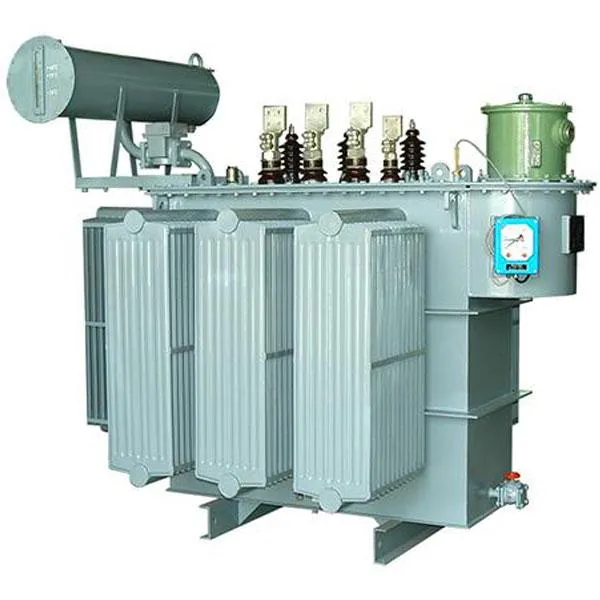
To understand how does a step up transformer work, start with electromagnetic induction.
An AC voltage applied to the primary winding produces an alternating current. This current establishes a changing magnetic flux within the transformer core. The changing flux links with the secondary winding and induces a voltage in it.
The number of turns on each winding determines the voltage ratio.
Working Principle of Step Up Transformer
The working principle of step up transformer can therefore be summarized in four stages:
1. AC voltage enters the primary winding.
2. Current in the primary winding produces alternating magnetic flux.
3. The magnetic flux travels through the transformer core and links with the secondary winding.
4. A higher voltage is induced in the secondary winding when the secondary has more turns.
This process occurs without mechanical movement between the electrical circuits.
For general power transformer requirements, the IEC 60076-1:2011 – Power Transformers – Part 1: General defines general requirements for power transformers and covers important aspects including safety, environmental considerations, tank testing, and condition-monitoring provisions.
What Is the Role of a Step Up Transformer in a Power Plant?
The role of a step up transformer becomes particularly important at the boundary between electricity generation and transmission.
Generators often produce electricity at a voltage that is lower than the voltage used for long-distance transmission. A step-up transformer raises the generator output to an appropriate transmission or collection voltage.
A simplified power-system structure can be represented as:
Generator → Step-Up Transformer → Transmission Network → Step-Down Transformer → Distribution Network → Loads
This arrangement allows generation equipment and transmission infrastructure to operate at voltage levels appropriate to their respective functions.
The transformer therefore acts as a critical interface between different parts of the electrical network rather than simply being a voltage-changing device.
Step Up Transformer Application in Renewable Energy
The step up transformer application has expanded with the development of renewable energy systems.
Wind Power Systems
Wind turbines generate electrical power at the generator level, which must be increased before it enters the wind farm collection system or a wider network.
The IEC/IEEE 60076-16:2018 – Power Transformers – Part 16: Transformers for Wind Turbine Applications specifically covers dry-type and liquid-immersed transformers used for wind turbine step-up applications, including transformers connecting wind turbine generators to wind farm collection systems or adjacent distribution networks.
This makes wind power one of the clearest examples of a modern application of step up transformer.
Solar Power Plants
Solar photovoltaic systems produce electricity through power electronic equipment. After conversion and aggregation, transformer equipment can raise the voltage to a level suitable for the plant's medium- or high-voltage collection and grid connection system.
The exact voltage architecture varies according to project size, grid requirements, inverter design, and local interconnection standards.
Hydroelectric Power Stations
Hydroelectric generators can also use step-up transformers to increase generator output voltage before power enters the transmission network.
This is particularly important for generating stations located far from major consumption centers.
Industrial and Infrastructure Applications
The use of step up transformer is not limited to utility-scale power generation.
Step-up transformers can be used where electrical equipment requires a higher voltage than the available supply can provide. Applications may include:
Industrial power systems
Specialized electrical equipment
Long-distance power distribution
Renewable energy collection systems
Railway and infrastructure power systems
Generator-grid interconnection
Voltage compensation projects
The source material also identifies applications where long cable distances or differences between supply voltage levels create voltage deficiencies. In these cases, a step-up transformer can help bring the voltage closer to the level required by connected equipment.
Advantages of Step Up Transformer
The advantages of step up transformer extend beyond voltage conversion.
Advantage | Practical Benefit |
Higher transmission voltage | Enables more economical long-distance power transfer |
Lower transmission current | Reduces resistive I²R losses |
Voltage matching | Connects equipment operating at different voltage levels |
Generator-grid interface | Allows generator output to connect to higher-voltage networks |
Flexible application | Suitable for utility, renewable and industrial systems |
Passive operation | No rotating mechanical components are required |
Voltage compensation | Can help address certain voltage-drop conditions |
Energy efficiency is especially important because transformer losses accumulate over long operating periods. The U.S. Department of Energy notes that transformers operate continuously for many years and that improvements in transformer efficiency can produce substantial energy savings across the power system.
Key Factors When Selecting a Step Up Transformer
Selecting a step-up transformer requires more than identifying the required voltage ratio.
Rated Power
The transformer must be appropriately rated for the expected load and operating conditions. An undersized transformer may experience excessive temperature rise and accelerated ageing.
Voltage Ratio
The primary and secondary voltage ratings must match the generator, power source, transmission system, or connected equipment.
Insulation Level
Higher operating voltage requires appropriate insulation coordination and testing. The IEC 60076-3:2013+A1:2018 – Power Transformers – Part 3: Insulation Levels, Dielectric Tests and External Clearances in Air specifies insulation requirements and associated dielectric tests for power transformer windings and terminals.
Cooling and Installation Conditions
Ambient temperature, altitude, load profile, installation location, ventilation, and environmental conditions can affect transformer performance.
Grid Connection Requirements
For utility and renewable projects, the transformer must also be compatible with the voltage, frequency, protection system, grounding arrangement, and interconnection requirements of the network.
Step Up Transformer vs Step Down Transformer
The easiest way to distinguish the two is by their voltage direction.
Characteristic | Step-Up Transformer | Step-Down Transformer |
Primary function | Increases voltage | Decreases voltage |
Secondary turns | More than primary | Fewer than primary |
Secondary voltage | Higher | Lower |
Typical location | Generator or transmission interface | Distribution or load interface |
Current relationship | Secondary current decreases | Secondary current increases |
Typical purpose | Efficient transmission | Usable supply voltage |
In a complete power system, both types can work together. A step-up transformer raises voltage near the generation point, while step-down transformers progressively reduce it before electricity reaches end users.
FAQ
What is the function of a step up transformer?
Its main function is to increase AC voltage from a lower level to a higher level. This can reduce current for a given power transfer and help lower resistive transmission losses.
What is the purpose of a step up transformer in a power plant?
It raises generator output voltage to a level suitable for transmission or connection to the plant's electrical collection system.
What is the use of step up transformer in renewable energy?
It is commonly used to increase voltage from wind turbine or solar power generation systems before electricity enters a collection or grid network.
How does a step up transformer work?
It uses electromagnetic induction. AC current in the primary winding creates changing magnetic flux, which induces voltage in the secondary winding. A higher secondary-to-primary turns ratio produces a higher secondary voltage.
What are the advantages of step up transformer?
Major advantages include reduced transmission current, lower resistive losses, voltage matching, generator-grid interconnection, and improved suitability for long-distance electricity transmission.
Can a step up transformer increase electrical power?
No. A transformer changes voltage and current levels rather than creating additional power. Real transformers also have losses, so output power is slightly lower than input power.
Conclusion
The step up transformer function is fundamental to efficient AC power transmission. By increasing voltage and reducing the current required for a given power transfer, it helps limit conductor losses and supports economical long-distance electricity delivery.
Beyond conventional power stations, the application of step up transformer technology now extends across wind farms, solar plants, hydroelectric facilities, industrial systems, and specialized voltage-matching applications.
When engineers evaluate a step-up transformer, voltage ratio is only one consideration. Rated power, insulation level, cooling, operating environment, grid requirements, and efficiency all influence the final selection. Standards such as IEC 60076-1:2011, IEC 60076-3:2013+A1:2018, and IEC/IEEE 60076-16:2018 provide useful technical frameworks for different power-transformer applications.
Jump to Content Sections
Leave a Message
You May Also Like